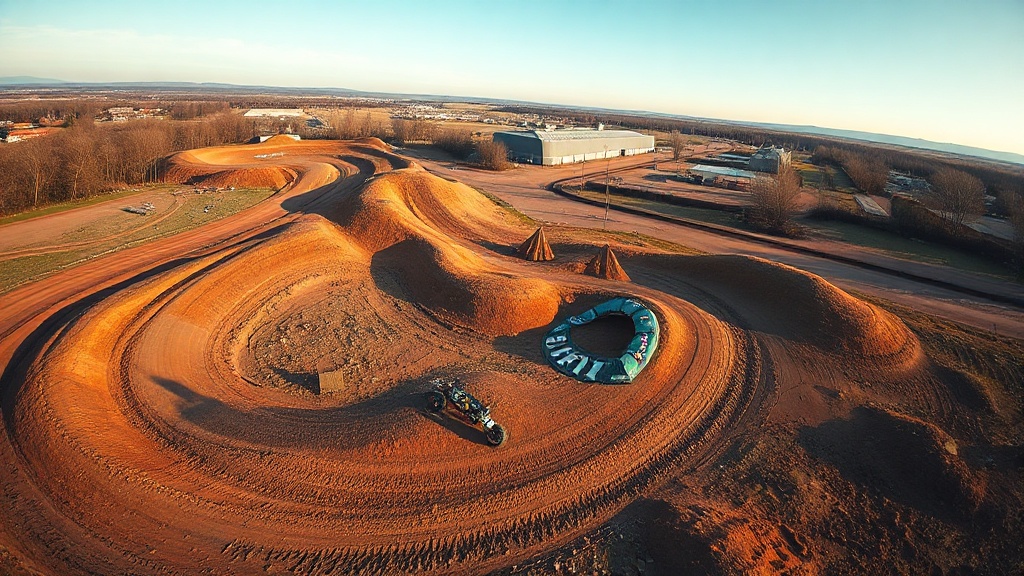
Running a motocross park or off-road riding facility is one of the most rewarding businesses in the powersports world. It is also one of the most misunderstood by the insurance industry. If you have ever called a standard business insurance agent and watched their enthusiasm evaporate the moment you said the words "dirt bikes" or "racing," you already know the problem. Motorsports is treated as a high-hazard class, and most mainstream carriers simply will not touch it. This guide walks operators through the coverages you actually need and explains why specialty insurance is the only realistic path to protecting your facility.
Why Standard Carriers Exclude Motorsports
The typical commercial policy is built for predictable, low-injury businesses — offices, retail shops, light service work. Off-road riding is the opposite. Riders fall, jumps go wrong, and collisions happen even on the safest, best-maintained tracks. Because of that injury frequency, standard carriers either decline the risk outright or quietly bury a motorsports exclusion and a racing exclusion in the policy language.
Here is the trap many operators fall into: they buy a cheap general business policy, assume they are covered, and only discover the exclusion after an injured rider files a claim. The carrier denies the claim, the operator pays defense costs out of pocket, and the "savings" become a financial disaster. Specialty programs exist precisely because they are designed around the realities of riding, jumping, and racing rather than pretending those activities do not happen.
The Core Coverages Every Operator Needs
A properly built insurance program for a riding facility is layered. No single policy does everything, and operators who understand the layers make far better decisions.
General Liability
This is the foundation. General liability responds when a third party claims your negligence caused them bodily injury or property damage. For a riding park, that could mean a rider who alleges a poorly marked obstacle caused a crash, or a visitor who trips on uneven ground near the staging area. General liability covers your legal defense and any settlement or judgment within your limits. For an off-road operation, it must be written by a carrier that knows and accepts the motorsports exposure — otherwise an exclusion can gut it.
Participant Accident Coverage
One of the most valuable tools available to riding facilities is participant accident coverage, sometimes called participant medical. This provides no-fault medical benefits to a rider who is injured at your facility, regardless of who was at fault. Because the injured rider gets help with medical bills quickly and without proving negligence, this coverage dramatically reduces the likelihood that a frustrated, uninsured rider turns around and sues you. It is one of the smartest risk-reduction investments an operator can make.
Premises Liability
Your land is an exposure all on its own. Premises liability addresses injuries tied to the property itself — the parking lot, the restrooms, the concession stand, walkways, and spectator areas. A rider may accept the risk of riding, but a parent walking to the restroom did not accept the risk of a broken handrail. Premises exposure is constant and year-round, even on days when the track is closed.
Commercial Property
Tracks are full of physical assets. Commercial property coverage protects your clubhouse, sign-in building, tools, track-grooming machinery, water trucks, timing equipment, fencing, and other structures against fire, theft, storms, and vandalism. A single piece of damaged track machinery can idle your whole operation, so replacement coverage matters.
Workers Compensation
If you have any employees — gate staff, flaggers, groundskeepers, mechanics, or event crew — workers compensation is almost certainly required by your state and is essential regardless. Flaggers in particular stand close to the action, and an injured staff member without coverage becomes a direct out-of-pocket liability.
Special Event and Spectator Liability
The moment you host a race day or competition, your exposure changes character. Special event liability addresses the spike in attendance and activity that comes with organized events, while spectator liability specifically responds when someone watching the action is injured. Crowds, parking, vendors, and excitement all increase risk, and many operators carry these as additions tied to event days.
Waivers Are Essential — But They Are Not Insurance
Every operator should require signed waivers and releases from riders, and assumption-of-risk language genuinely helps your legal defense. But a waiver is a defense tool, not a payment tool. Courts throw waivers out for vague language, for gross negligence claims, and frequently when minors are involved. A waiver does not pay a hospital bill, fund your legal defense, or rebuild a burned clubhouse. Insurance does those things. Waivers and insurance work together; neither replaces the other.
Build a Program That Fits Your Operation
Every facility is different. A weekend practice track has a different profile than a full-scale racing complex hosting sanctioned events. The right approach is a program tailored to your acreage, attendance, event schedule, staffing, and amenities — written by people who understand motorsports rather than fearing it.
Talk to a Specialist Today
Do not wait for a denied claim to discover the gaps in a standard policy. Our team builds insurance programs specifically for motocross parks and off-road riding facilities. Call 844-967-5247 or request a quote today, and let us help you protect everything you have built.